Background
What You Need to Know
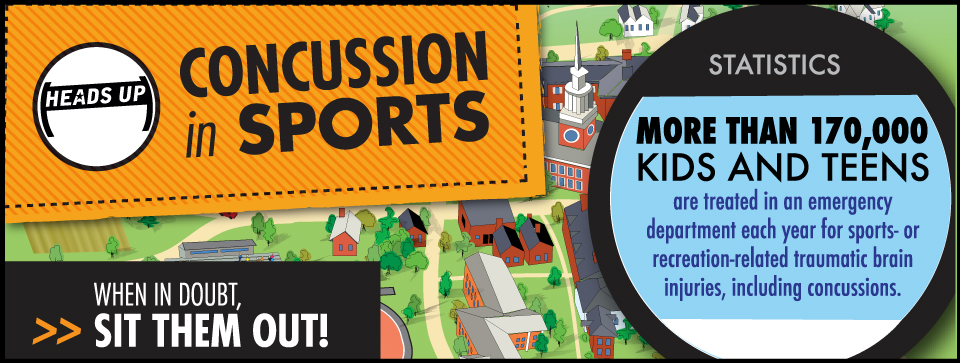
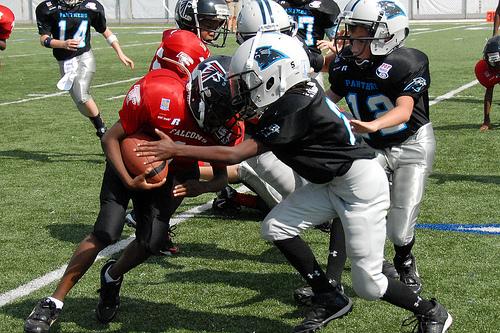
Participation in youth sports is considered a rite of passage in American society. While all youth sports involve some concussion risk, numerous studies find that the highest rates of concussion occur in youth football. Between 2007 and 2014, all U.S. states passed concussion legislation regulating youth sports participation — but the timing and framing of those laws varied dramatically.
This research asks two questions: Why were some states slower than others to pass concussion laws? And when states did act, why did some print media identify youth football as the justification — while others did not?
Study One — Legislation Timing
Testing Two Competing Hypotheses
The researchers used an event history regression model to test two competing explanations for why states passed concussion laws at different times. Both hypotheses focused on the level of youth sport participation in each state — but predicted opposite directions of effect.
Constituency Hypothesis
More Athletes → Faster Laws
States with higher levels of youth sport participation will adopt concussion legislation earlier. A larger at-risk population creates political pressure for protective regulation — organizations are more likely to act quickly when laws affect many people.
Not supported by the data
Resistance Hypothesis
More Athletes → Slower Laws
States with higher levels of youth sport participation will adopt concussion legislation later. Sport carries entrenched cultural and institutional interests that are unlikely to change quickly — states with more youth athletes may face greater resistance to medically informed regulation.
Supported by the data
Study One — Findings
Social Context Shapes Medical Policy
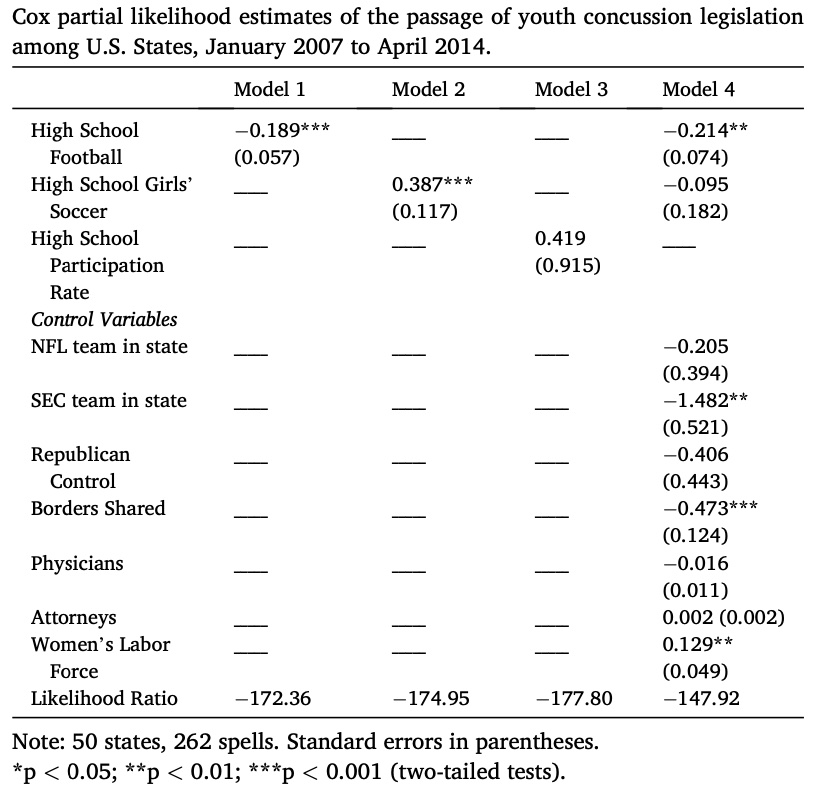
The results support the resistance hypothesis: actors who support high school football resisted efforts to medicalize youth concussions at the institutional level. Social context helps determine why states pass medically informed legislation at different times.
- States with more high school football participation passed concussion laws significantly later — the more entrenched football culture, the slower the legislative response
- States with strong college football presence — specifically SEC Conference membership — also passed concussion laws later
- States with more gender-egalitarian views passed concussion laws earlier, suggesting that cultural openness to health-protective norms accelerates medical policy adoption
Study Two — Media Framing
How the NFL Shaped Public Discourse
The second study collected and analyzed newspaper coverage of the passage of youth sports concussion laws in every state. The framing of these laws involved different interest groups — the NFL, scientists, public health officials, youth sports organizations, and parents — each attempting to shape legislation and public discourse.
This type of analysis reveals sources of cultural and organized interest group power: who gets to define a public health problem, on whose terms, and with what consequences for policy.
The NFL's Strategy
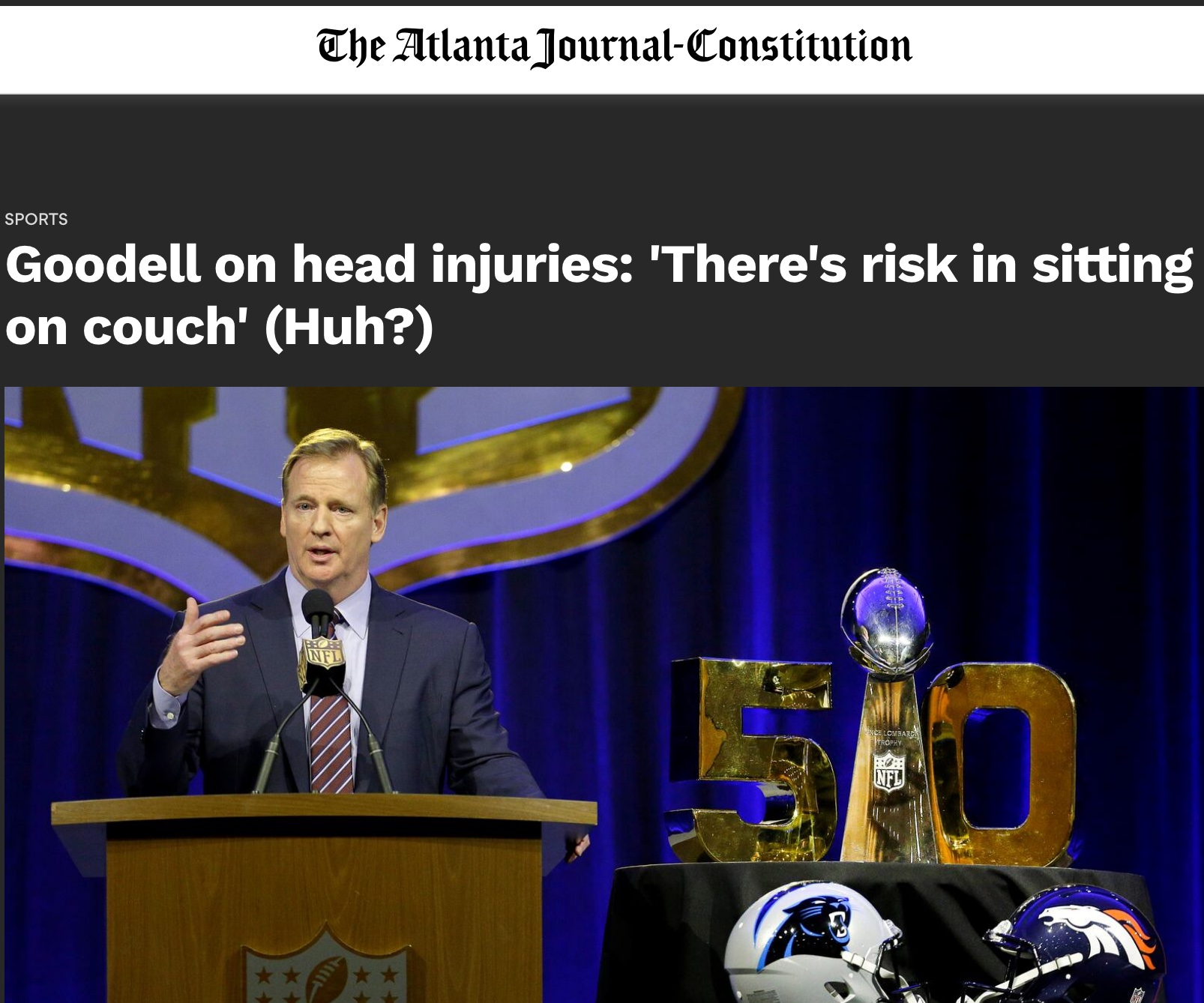
The NFL responded to Congressional hearings about its handling of professional player concussions by sending letters to 44 states, broadly advocating for concussion laws that protected youth athletes — framed in a way that did not harm the NFL. This is a textbook example of corporate counterframing: redirecting a scandal by becoming the public advocate for the very issue at the center of the scandal.
Study Two — Findings
Seven Themes, One Dominant Narrative
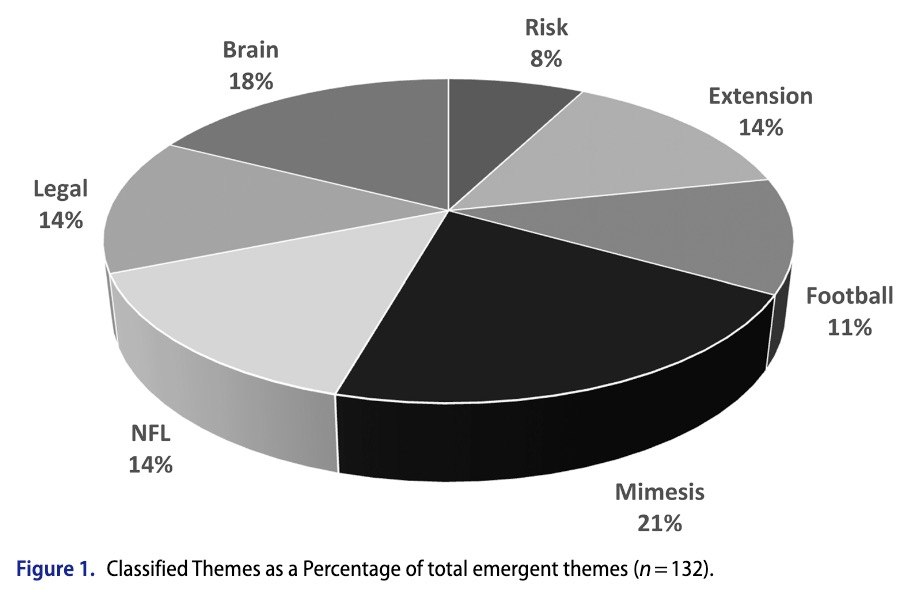
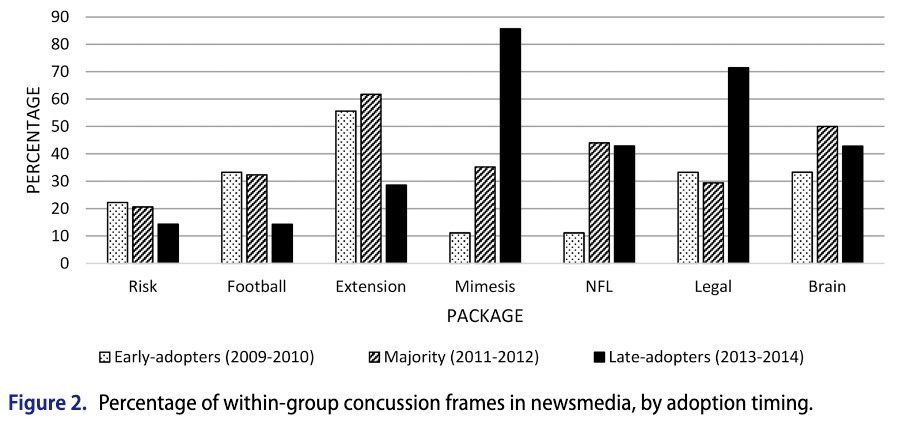
The researchers identified seven distinct themes in newspaper reporting on youth sports concussion legislation. Only ten state newspaper accounts presented a critical perspective on the specific risks of youth football. The vast majority of coverage was hospitable to the NFL's preferred framing.
- 1 "All sports carry risk" — the dominant theme, which diluted the specific concussion danger of football by treating it as equivalent to all other youth sports
- 2 Youth athlete protection — framing legislation as a universal safeguard for all young athletes, regardless of sport
- 3 NFL advocacy — coverage presenting the NFL as a responsible public health actor and advocate for youth safety
- 4 Medical/scientific authority — citing medical organizations and research to legitimize concussion laws without specifying football's unique risk profile
- 5 Return-to-play protocols — focusing on technical procedures rather than the question of whether football is uniquely dangerous
- 6 Coach and parent education — emphasizing awareness and training as solutions, deflecting from structural questions about the sport itself
- 7 Football-specific risk — the only critical theme, present in only 10 of 50 states' coverage, directly naming football as carrying unique and elevated concussion danger
"Corporations driven by profit attempt to influence media behavior driven by organizational preferences — shaping the terms of public health discourse."
Implications
How Can You Use This Research?
Policy makers and public health advocates can use this research to craft strategies that account for the unique social and cultural dynamics influencing the passage of public health law at the state level. Understanding these dynamics — particularly the role of organized resistance from entrenched interests — can help legislators formulate more comprehensive approaches to public health crises.
Public health organizations and health social movements can use this research to identify how corporate counterframing operates — and how to anticipate and counter it. The NFL's strategy of redirecting attention from professional player safety to universal youth athlete protection is a template that other industries facing regulatory pressure have used and will use again.
Researchers in environmental and health sociology may use this work to connect the study of media framing with institutional resistance to medical regulation — a pattern visible across many public health crises, from tobacco to opioids to climate change.