Background
What You Need to Know
Human activities in Latin American countries have produced past and ongoing deforestation in the Amazon and the Andes. The illegal production of cocaine is a major driver of these environmental outcomes — but in recent years, the extraction of illegal gold has yielded larger export values than cocaine. Together, these activities have far-reaching environmental, economic, and social consequences.
This research uses a critical realist perspective to investigate how, when, and under what conditions treadmills of production and destruction are absent, present, and thriving in Colombia and Peru. The Amazon basin is nearing a tipping point: deforestation could collapse the moisture recycling system that sustains the entire rainforest ecosystem — a catastrophe that would extend well beyond the region.
Case Study One
Colombia: Synergistic Treadmills in a Violent Conflict
The Civil War & the Cocaine Treadmill
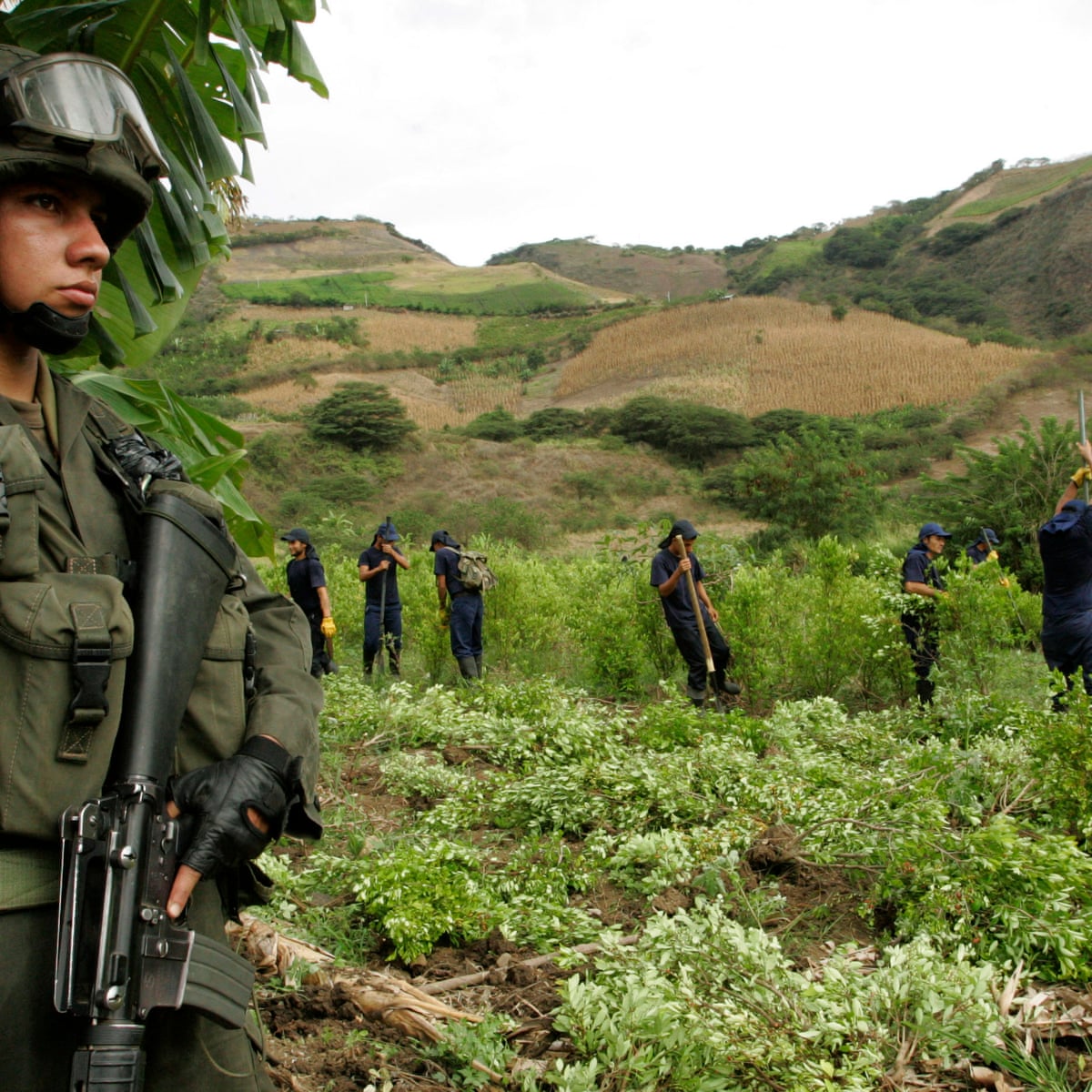
Colombia's long internal conflict spawned synergistic treadmills of production and destruction. FARC and paramilitary forces both financed their military operations through coca revenues — with FARC protecting growers and taxing production, and paramilitaries working directly with criminal cartels. The cocaine sector proved so lucrative that it allowed FARC to control 622 municipalities — roughly 61% of the country — by the mid-1990s.
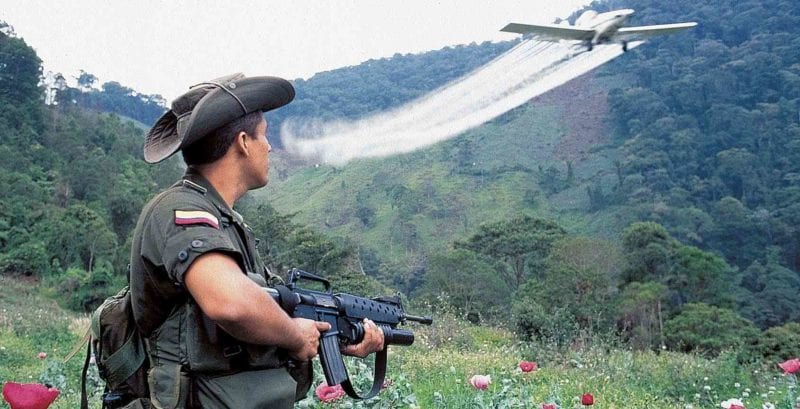
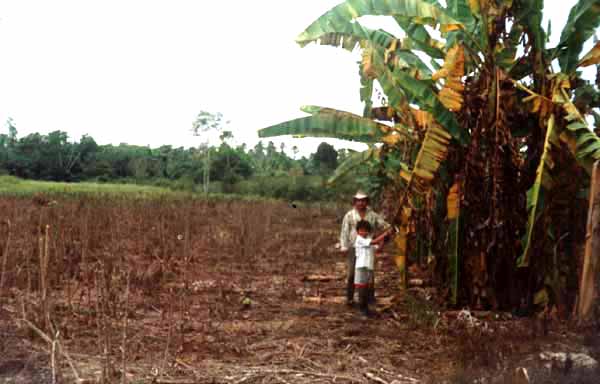
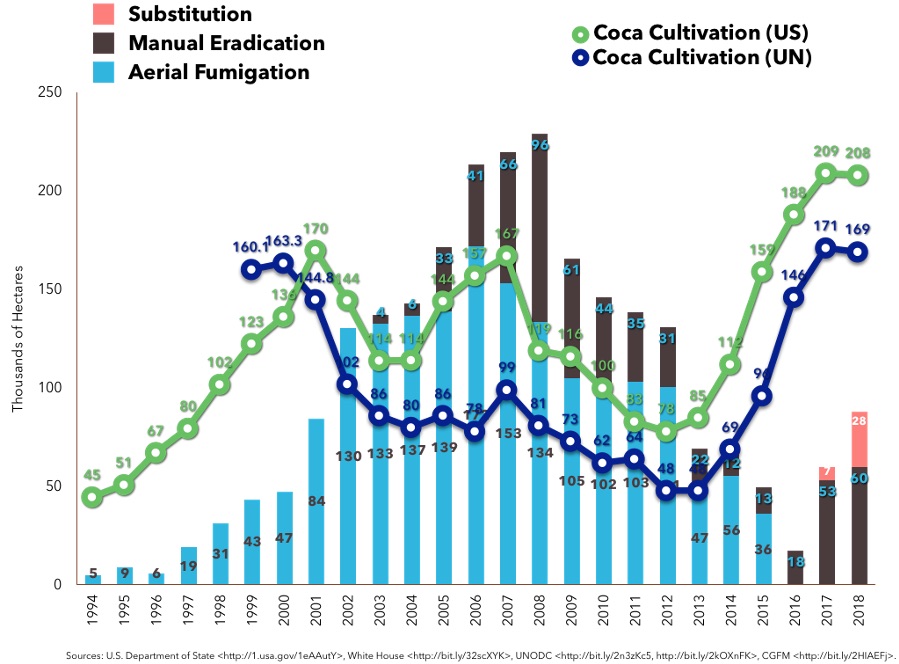
U.S.-backed aerial fumigation under Plan Colombia became a tool of ecocide: defoliants killed virtually all vegetation, polluted waterways, and forced growers into ever more remote forest regions, accelerating deforestation. The processing of coca leaves into paste required large volumes of water and toxic chemicals — including kerosene, sulfuric acid, and potassium carbonate — which were dumped into rivers and streams feeding the Amazon and Orinoco.
"The warring parties were locked in deadly competition that only accelerated the environmental calamity."
Gold: The Conflict's Second Economy
Following the 2008 global financial crisis, gold prices surged dramatically — and illegal gold mining rapidly grew alongside the cocaine economy. By the time of the 2016 ceasefire, an estimated 80% of gold exported from Colombia had been extracted illegally and smuggled out of the country. Illegal mining involved clearcutting vast tracts of land, dredging waterways, and using mercury — a highly toxic compound that bioaccumulates through the food chain.
Just as coca revenues sustained both FARC and paramilitary forces, gold became a key source of war financing in the years preceding the ceasefire — tightening the relationship between the treadmill of destruction and the treadmill of production.
After the Ceasefire: The Treadmill Transforms
The 2016 peace accord between FARC and the Colombian government dramatically reduced armed conflict — but it did not end environmental destruction. In fact, deforestation accelerated sharply after the ceasefire. FARC had prohibited coercive land-grabbing in the remote areas it controlled, and its demobilization created a vacuum quickly filled by large landowners, corporations, and criminal organizations.
Cattle ranching and palm oil plantations replaced old-growth forests in former FARC-controlled territories. Among Colombia's parks and nature reserves, 79% experienced increased deforestation in the post-conflict years — a 177% increase in the deforestation rate compared to the final years of conflict.
Critical Finding
The treadmill of destruction receded after the ceasefire — but the treadmill of production became more violent and more destructive. The schema of violent land appropriation, developed during decades of armed conflict, was simply transposed from military objectives to economic ones: land grabbing, deforestation, and resource extraction continued with the same tools and the same actors, now pursuing profit rather than military advantage.
Case Study Two
Peru: Two Commodity Chains, Two Divergent Paths
Peru presents a contrast to Colombia — but not a reassuring one. The case studies illuminate the contingency of treadmill dynamics: the same commodities can generate radically different environmental and social outcomes depending on institutional context, the presence or absence of armed conflict, and the nature of governance.
Cocaine in Peru
Cautious Optimism: No Treadmill Emerged
Despite Peru surpassing Colombia as the world's largest coca producer in the early 2010s, cocaine production in Peru has not been characterized by the freneticism of a treadmill. The Shining Path insurgency — which previously financed itself through coca revenues — was dismantled in the 1990s. Without a military force depending on drug revenues, and with the memory of Fujimora-era ecocidal eradication discouraging aggressive state intervention, coca cultivation operates at a lower intensity. Peruvian crime syndicates manage production without triggering the cycle of displacement, escalating violence, and remote-area deforestation that defines a treadmill.
Verdict: Treadmill of production and destruction both currently absent — though conditions for their emergence remain in place.
Gold in Peru
Pessimism Warranted: A Violent Treadmill Operates
Gold mining in Peru meets all three criteria of a treadmill. Powerful organizations appropriate nature to amass capital through a lucrative global commodity chain. Competition drives accelerating deforestation — gold mining has devastated nearly 370,000 acres of the Peruvian Amazon, an elevenfold increase since 2000. And powerful actors obscure environmental damage: the state promotes large formal mines as pathways to development while turning a blind eye to mercury contamination, displacement of Indigenous communities, and human trafficking in mining camps. Private security forces — which outnumber Peru's police — enforce this arrangement with violence.
Verdict: Violent treadmill of production fully operational, driven by legal and illegal gold extraction alike.
Methodology
What Did the Researchers Do?
The researchers integrated treadmill theory with critical realism to investigate coca production and gold mining across Colombia and Peru. Rather than assuming treadmills are inevitable or ubiquitous, the framework emphasizes their contingency — examining not only when and where treadmills operate, but also when and where they fail to emerge, transform, or decline.
The analysis draws on academic research, government and NGO data, investigative reporting, and declassified documents to trace the emergence, transformation, and — in some cases — the absence of treadmill dynamics across two countries and two commodity chains over several decades.
| Dimension | Colombia · Cocaine | Colombia · Gold | Peru · Cocaine | Peru · Gold |
|---|---|---|---|---|
| Treadmill of Production | Present & violent (post-ceasefire) | Present & growing | Absent | Present & violent |
| Treadmill of Destruction | Receding since 2016 | Present during conflict | Absent | Absent |
| Primary Environmental Harm | Deforestation, fumigation, water contamination | Mercury contamination, land clearing | Moderate deforestation | Massive deforestation, mercury poisoning |
| State Role | Ecocidal eradication (with U.S. support) | Complicit or absent | Uneven, constrained eradication | Actively promotes large mining |
Findings
What Did the Researchers Find?
The case studies establish several key contributions to treadmill theory and to the sociology of environmental degradation in the Anthropocene:
- Treadmills are contingent, not inevitable. The same commodity (cocaine) produces treadmill dynamics in Colombia but not in Peru — demonstrating that treadmills require specific institutional conditions, not merely the presence of a lucrative resource
- Treadmills can transform without disappearing. After Colombia's ceasefire, the treadmill of destruction receded but its schema — violent appropriation of land and resources — was transposed into a treadmill of production, continuing ecological destruction under an economic rather than military logic
- Treadmills of production can be violent. The Colombian case challenges the assumption that violence is unique to treadmills of destruction. Post-ceasefire land grabbing, deforestation, and resource extraction rest on coercion, intimidation, and structural violence — capital accumulation through Marxian primitive accumulation
- Peace does not automatically protect the environment. The 177% increase in deforestation in Colombia's protected areas after the 2016 ceasefire is one of this paper's most striking findings — and a direct challenge to the assumption that ending armed conflict reduces environmental harm
- Scale matters. While coca and illegal gold mining make modest contributions to GDP, their environmental impacts are wildly disproportionate — particularly because they operate within and adjacent to some of the world's most fragile and biodiverse ecosystems
Implications
How Can You Use This Research?
The Andes and the Amazon basin house remarkable biodiversity, and these ecosystems are fragile. Unlike climate change — which holds out some hope of technological mitigation — the destruction of biodiversity does not yield a technological solution. Loss of species and ecosystems is irreversible.
Governance in the Anthropocene requires what theorist John Dryzek calls reflexivity — the capacity to listen to an active Earth system, reconsider core values, and respond to early warnings of ecological tipping points. The treadmill dynamics in Colombia and Peru represent precisely the kind of self-reinforcing, institutionally entrenched processes that governance must confront and disrupt.
Governments and international organizations should focus not only on the people extracting resources, but on the financial institutions, exporters, and corporations that profit from and enable these treadmills. As Peru's special environmental prosecutor observed: "We have dedicated our efforts on the people who extract the gold when we should be focusing on people who finance the activity."
Environmental and policy organizations can use this research to identify the specific schemas and resource networks that sustain treadmills in the Andean region — and the conditions under which treadmills have failed to emerge or have declined — as a guide to targeted intervention.